Articles
Values of Japanese Fasteners that are Spreading Around the World
– The Future Opened by Japanese Fasteners
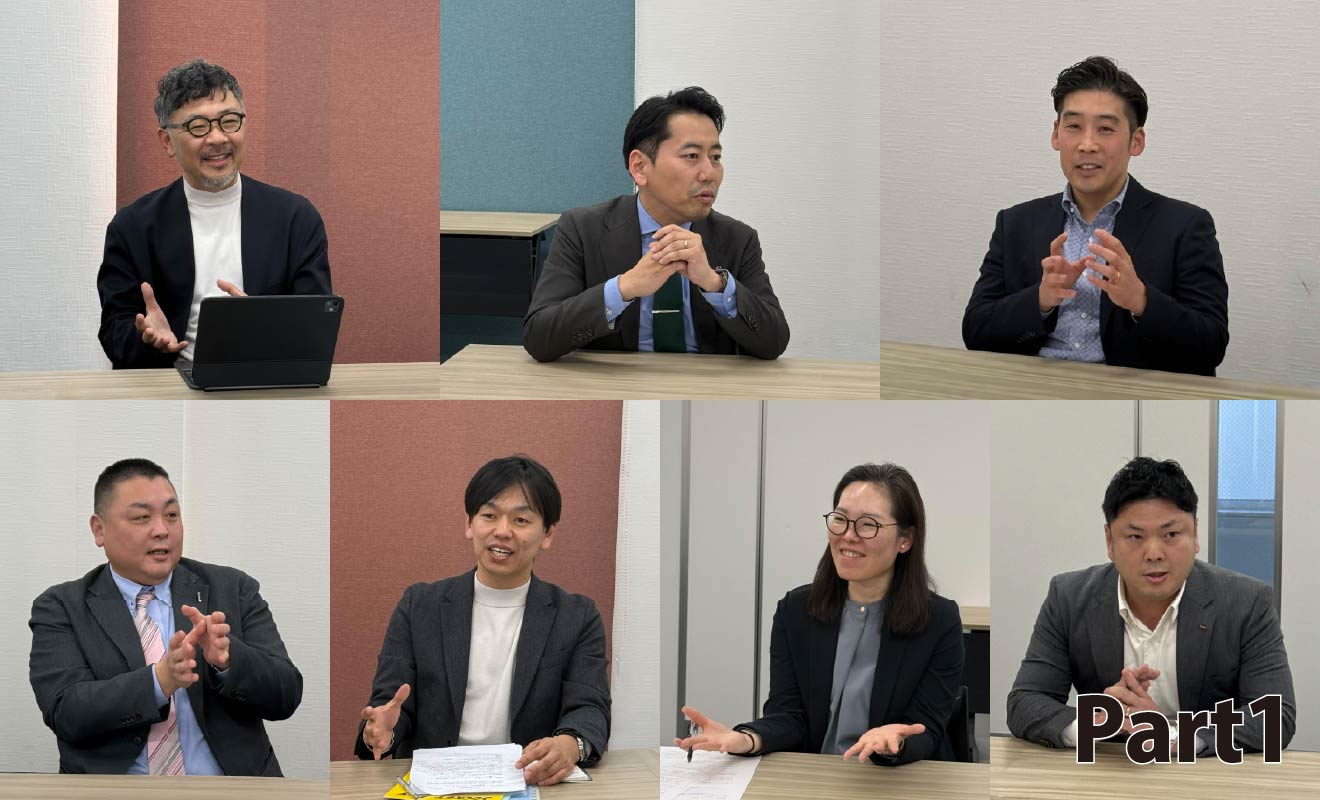
【Part.1】 This article features the first half of a roundtable discussion
In February 2026, Sunco Industries held a roundtable discussion with five key suppliers. Building on the first session held in July 2025, this second discussion explored the theme “From importing to exporting: overseas markets opened by Japanese fasteners.” Participants shared practical insights into overseas business development, lessons learned from their international operation and perspective on future growth opportunities.
Moderator: To begin, could each of you briefly introduce yourselves?
Hashimoto: I’m Atsushi Hashimoto, President of Unytite Corporation. Our U.S. subsidiary was established in 1986, and we began local manufacturing and sales in 1990. In 2005, we opened a factory in China, which initially produced molds and tools but now manufactures bolts and nuts as well. However, because a large share of its output serves the automotive sector, our Chinese operations are currently facing some challenges.
Kariya: I am Yuki Kariya, Director and Branding Chief at QP Fastening Works(Reappointed as Managing Director as of June 1). I became involved in overseas business about three years ago with the mission of strengthening our company’s brand recognition. Our international business, however, dates back to around 1987, when we began supplying our flagship product, PIAS, to a German customer – a relationship that has continued for more than 40 years. In addition, our bi-metal drill screw PIASTA* is sold worldwide, particularly in Europe. At present, approximately 60% of our total sales come from overseas markets.
*PIASTA: a bi-metal drill screw developed by QP Fastening Works, using different materials for the head and drilling tip.
Taniguchi: I am Yoshifumi Taniguchi, President of Nakaumi Industries. Founded in 1961, our company enters its 66th fiscal year this year. Our Vietnam factory, established in 2017, is also about to celebrate its 10th anniversary. When Europe imposed anti-dumping duties on China-made threaded rods, our core product category, this created a significant opportunity for us. As a result, our business expanded rapidly across Europe, where we now serve approximately 20 companies.
Shiba: I am Daisuke Shiba, Executive Managing Director of Kishu Fastener Group. Currently, we do not export directly overseas; instead, we export through trading companies. About 30 years ago, we did export directly to the United States, but exchange rate fluctuations eventually made the business unprofitable. Today, however, both our cost structure and the global environment have changed. This year, we hope to actively visit overseas markets and lay the groundwork for re-entering international business.
Murakami: I am Tateo Murakami, Deputy General Manager of Fastening Division at Nippon Fastener Corporation. Our business has three pillars: steel wires for cold heading and cold forging, hexagon socket head cap screws and JFE high-strength bolts. While we do not export directly, our hexagon socket head cap screws are exported to countries such as China and India, where they are used in robotics and machine tool industries. We are now carefully monitoring market trends, as there may be opportunities for direct exports to the United States.
Takada: I am Tomokazu Takada, Assistant Section Manager in the International Trade Section at Sunco Industries. Founded in 1948, Sunco is a trading company specializing in fasteners. Although our primary business remains domestic, we established the International Trade Section about eight years ago to expand overseas operations. Initially, our focus was mainly on imports. About four years ago, however, to hedge against the risk of stagnation in the Japanese economy, we began to place greater emphasis on exports. Our current goal is for exports to account for 1% of total sales.
In addition, as a trading company, we place strong emphasis on public relations. Through initiatives such as publishing our proprietary magazine Socket Boy and advertising in fastener-related publications, we aim to communicate information about the Japanese fastener industry and market to a global audience.
Hiraoka: I am Miki Hiraoka, Manager in the Purchasing Department at Sunco Industries. The core objective of our export business is to steadily increase the number of customers. By looking beyond the domestic market and expanding overseas, we believe that even gaining one additional customer at a time will ultimately contribute to sustainable sales growth. For this reason, we actively support export expansion through PR initiatives such as media outreach and magazine publishing.
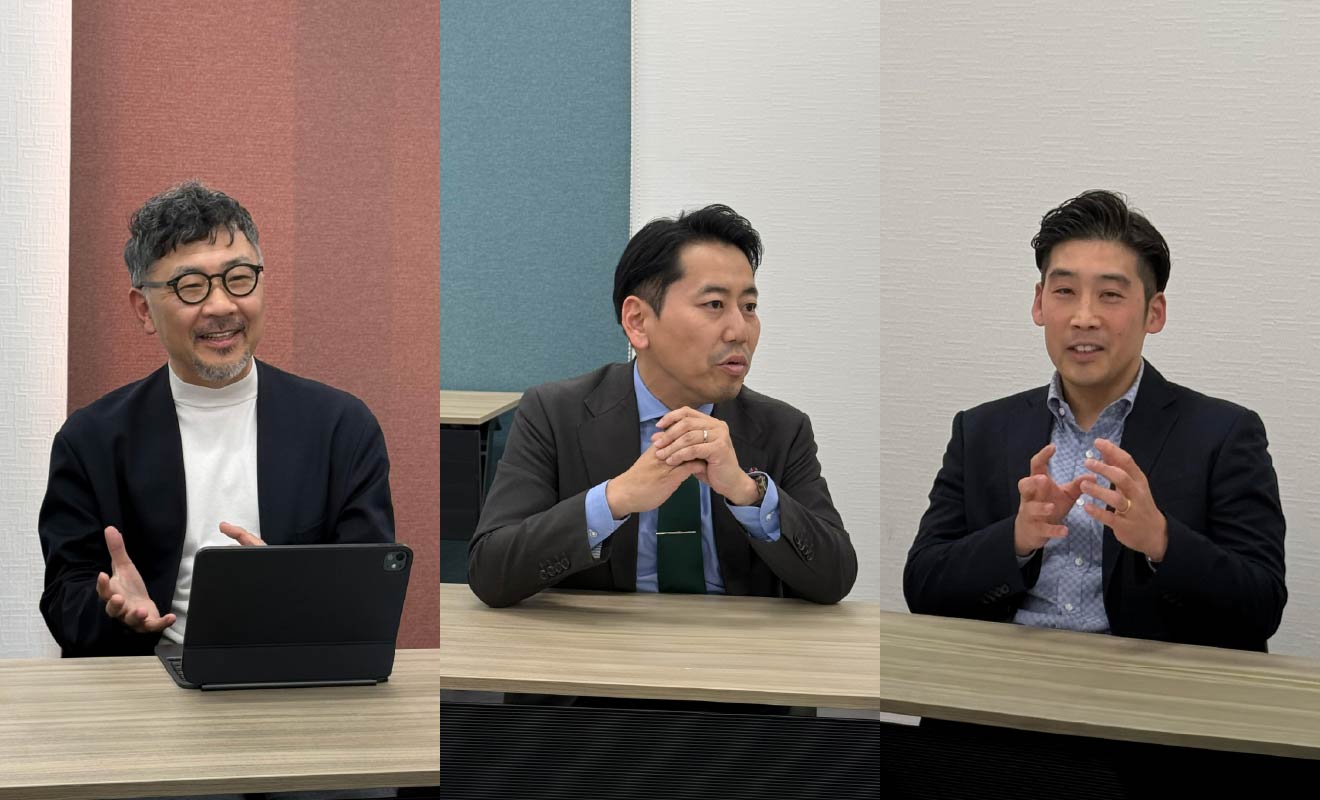
Yoshifumi Taniguchi - President, Nakaumi Industries Co. Ltd. / Atsushi "Attsie" Hashimoto - President, Unytite Corporation / Tateo Murakami - Deputy General Manager, Fastening Division, Nippon Fastener Corporation
Moderator: From an overseas business perspective, what do you consider your company’s key strengths, and where are you focusing your efforts most?
Hashimoto: Our strength lies in our people. We have employees with overseas business experience in the U.S. and China, and we often assign younger staff to international roles. This results in relatively low resistance to overseas business within our organization.
In addition, the manufacturing expertise and know-how we have accumulated over many years are major assets. I believe that the combination of strong human resources and technical capability plays a vital role in our international operations.
Kariya: Our key strength is the strong brand image associated with PIAS and PIASTA, which are widely recognized as high-quality products. In particular, European customers often associate PIAS with premium construction drilling screws, giving us a clear competitive advantage.
Our current challenge is to ensure that this brand image is continuously reinforced through further improvements in actual product quality.
Taniguchi: My view may differ slightly, but I believe our greatest strength lies in our corporate culture. Threaded bolts, our main product, are difficult to differentiate by quality alone, and we cannot compete with overseas manufacturers in terms of scale. Nevertheless, our willingness to take on new challenges with a positive attitude - “That sounds interesting, let’s try it” - is our strongest asset.
In addition, I feel that the uniquely Japanese approach to service and attention to detail is highly valued in overseas business.
Shiba: Although we have yet to expand overseas, we aim to use the same strengths we have cultivated domestically. These include our integrated production system - from wire drawing and heading to plating and packaging - as well as our emphasis on service quality.
Murakami: Our strength lies in quality assurance that extends all the way back to the raw materials. Having originally started as a wire manufacturer, we maintain close, long-standing relationships with steel producers, enabling rigorous quality control from the material stage onward.
The brand value built by our predecessors is also highly regarded by customers. Going forward, our challenge will be how to best utilize these strengths in the global markets.
Takada: Sunco’s greatest strength is our extensive product lineup centered on JIS fasteners. We currently handle approximately two million SKUs and offer overseas customers the same advantages as in Japan: small-lot orders, a wide variety, and rapid delivery. Demand is particularly strong for fasteners that are difficult to procure locally but are needed urgently.
We think the reason why our customers choose us is because of these factors. The need for fasteners that cannot be obtained locally but that are needed for immediate use is high and we receive a lot of orders on that basis.
We will continue to strengthen our PR efforts to build greater brand recognition in overseas markets. The steady increase in inquiries generated through initiatives such as publishing our own magazine, Socket Boy, operating multilingual websites and maintaining a daily social media presence has clearly demonstrated the importance and effectiveness of these promotional activities.
Hiraoka: Our logistics center is another major strength. Located in Higashiosaka, a city renowned for its manufacturing heritage, our mission is to deliver JIS fasteners to customers worldwide through a highly efficient logistics system. By fully leveraging this system, we are able to ensure fast and reliable product delivery.
In addition, our overseas operations are supported through close collaboration across all departments. Rather than being handled solely by the International Trade Section, export-related activities involve the sales and purchasing departments as well. This company-wide, cross-functional approach - rather than relying on a limited number of individuals - enables us to expand our overseas business more effectively.
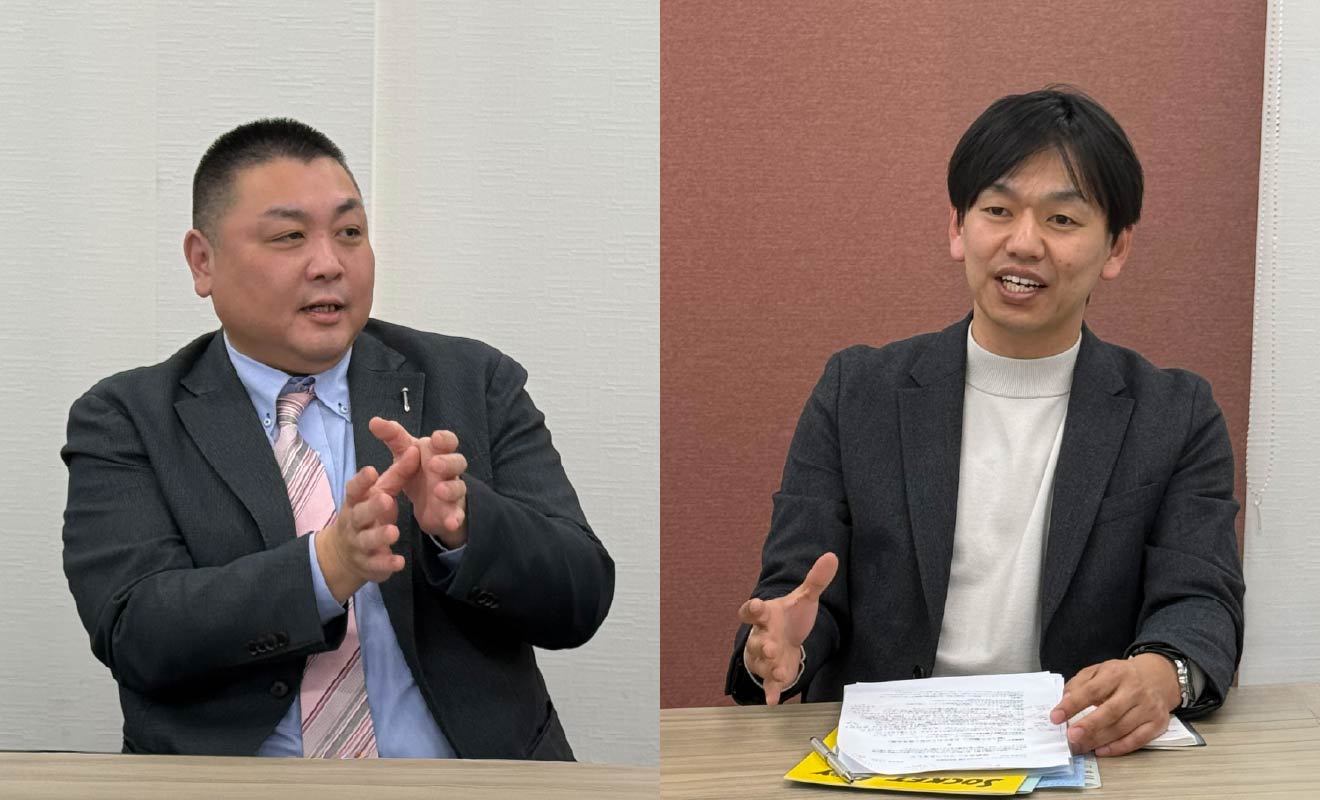
Yuki Kariya - Managing Director, QP Fastening Works Co. Ltd. / Daisuke Shiba - Executive Managing Director, Kishu Fastener Group
Moderator: “Quality” has come up as a key word. How do you feel Japanese quality is viewed by companies outside Japan?
Hashimoto: I believe Japanese products are widely recognized for their high quality, and products manufactured by Japanese companies are trusted overseas. We often hear positive feedback from European companies regarding the quality of PIASTA, produced by QP Fastening Works.
Kariya: Yes, we feel our quality is well appreciated by many customers. We focus not only on delivering high-quality products but also on responding quickly and attentively to customer inquiries, both domestically and internationally. This kind of Japanese “quality,” including our approach to customer service, is a clear competitive advantage over overseas companies.
Moderator: What do you think your company needs to strengthen to support further development?
Hashimoto: In addition to reviewing how we communicate our added value, I believe it is essential to further strengthen our corporate culture and organizational capabilities. Ultimately, trust in “people” is often the deciding factor for customers, and in some cases, it can be even more important than the product itself. As mentioned earlier, it is crucial to build a system in which overseas business is not handled exclusively by a single department. Instead, the entire organization should be involved, ensuring that any employee can respond with the same level of speed and quality.
Listening to Mr. Kariya’s experience at QP Fastening Works also highlighted the importance of brand building. We need to place greater emphasis on strengthening our brand image and expanding recognition of the name “Unytite” through a variety of promotional and advertising channels.
Kariya: I believe it is crucial for us to actively turn our attention to overseas markets. In the past, although we often heard about other companies’ overseas businesses, we had limited opportunities to directly gather information on market trends and customer needs. As a result, we did not yet have sufficient insight or the know-how that is essential for developing overseas business. When visiting overseas markets, I also feel it is important to go beyond formal business meetings and build trust through more personal interactions, such as having lunch or dinner with clients.
In addition, we recognize the need to continuously improve our English communication skills so that we can interact directly with overseas customers. As part of this effort, we have been holding in-house English conversation classes with external instructors.
Taniguchi: At our company, I believe we need to further strengthen internal education and information sharing. As shipment volumes and business scale continue to grow, work has increasingly become dependent on specific individuals, with knowledge and know-how concentrated among a limited number of employees. Going forward, it has become essential for the entire organization to work together. Our most pressing challenge is to establish systems that enable information and expertise to be shared widely across the company, along with a well-structured internal training framework.
Shiba: With the ongoing difficulty of securing personnel in Japan, we believe it is increasingly important to further promote labor-saving initiatives and automation within our factories. Drawing on our experience of withdrawing from export business due to cost issues some 30 years ago, we are now planning to build a new automated factory, with construction scheduled to begin in October next year. By strengthening our cost competitiveness through automation, we aim to establish a manufacturing system that customers will actively choose.
In addition, listening to the perspectives shared by other participants today has reinforced my belief that maintaining a high level of motivation and taking proactive initiatives are essential when launching an export business from scratch.
Murakami: I believe we need to further strengthen our ability to communicate externally, as well as working on our branding efforts. In the Japanese market, there has traditionally been an environment where high-quality products would sell naturally. However, when expanding overseas, even excellent products cannot be properly evaluated if our company and products are not widely known. In today’s environment, where information searches driven by AI have become mainstream, enhancing our communication capabilities and strengthening brand visibility - such as improving search rankings and overall exposure - are extremely important. These efforts must go hand in hand with the continued development of high-quality products.
Takada: I believe it is essential to establish clear internal standards for import and export operations. In the past, these tasks were handled solely by the International Trade Section. However, sales and purchasing departments are now gradually becoming involved in overseas business, and we are building a company-wide structure that enables us to manage international operations more effectively.
In addition, we will continue to focus on increasing our visibility in overseas markets. Along with advertising in fastener-related magazines, we plan to proactively list our products on B2B platforms as part of our ongoing efforts to strengthen name recognition internationally.
Hiraoka: We would like to continue expanding our product lineup for both domestic and international markets, with a particular focus on delivering JIS fasteners to customers worldwide.
In addition, with the rapid spread of AI technologies, effective information dissemination that performs well with search engines and AI-driven searches is becoming increasingly important. It is essential to stay informed about mechanisms that improve search visibility and to proactively build expertise in this area in order to ensure that our information reaches the right audiences.
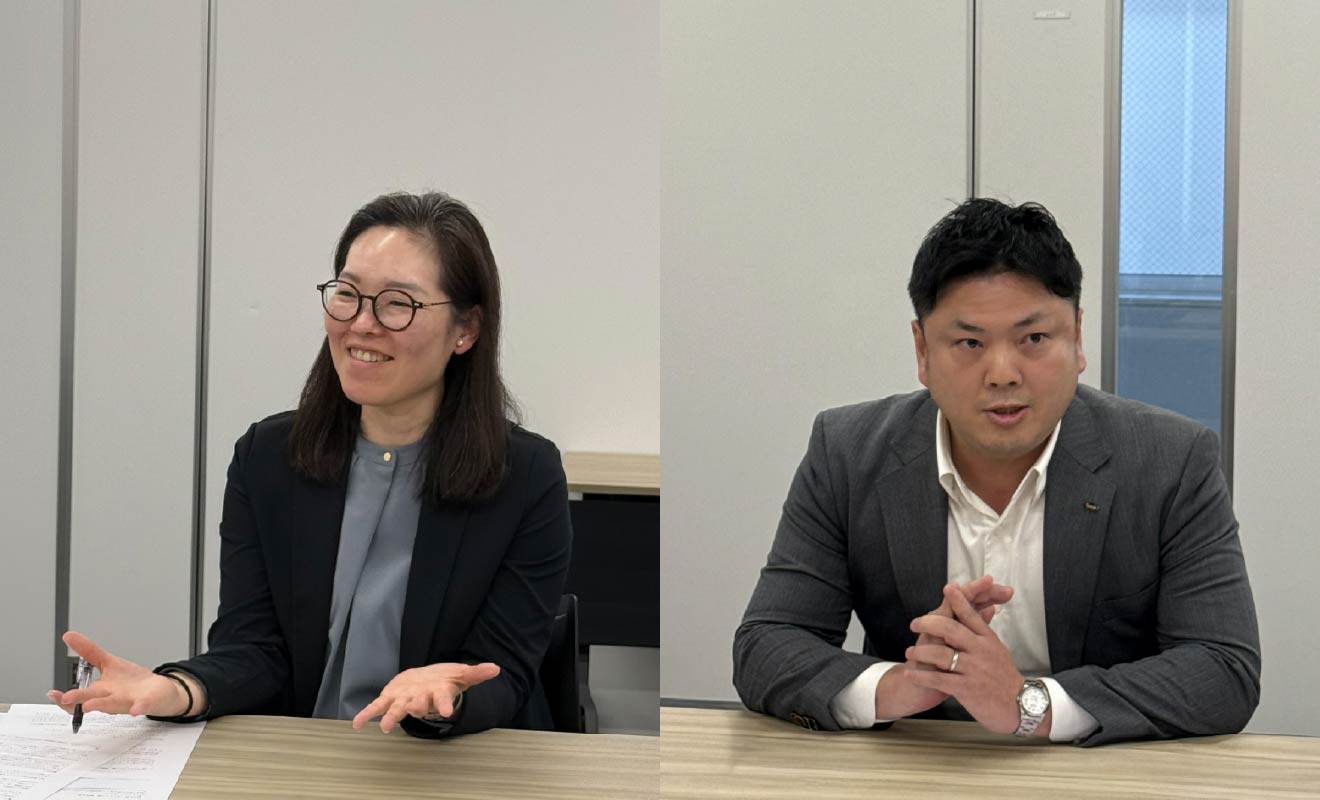
Miki Hiraoka - Manager, Sunco Industries Co. Ltd. / Tomokazu Takada - Assistant Section Manager, Sunco Industries Co. Ltd.
Moderator: You mentioned how important it is to get your message across. Could you share how you approach PR in overseas markets?
Hashimoto: We would like to make more effective use of social media. We often follow the Instagram posts from Nakaumi Industries and find them very engaging. By learning from their approach, we hope to develop a more effective and impactful social media presence of our own.
Murakami: How frequently does Nakaumi Industries post on Instagram?
Taniguchi: We haven’t set a strict schedule, but we make an effort to postInstagram Stories on a daily basis.
Hashimoto: In the United States, LinkedIn is widely used as a business-focused social media platform. While it is primarily a space for individuals to promote themselves professionally, it can also lead to new business opportunities.
Kariya: LinkedIn has become an increasingly important platform for business. Many of our European customers actively use it, and I see particular value in its ability to make personal connections and business networks visible.
Moderator: So, business-focused social media platforms also play an important role in PR efforts.
Article by Chizuru Kishibe